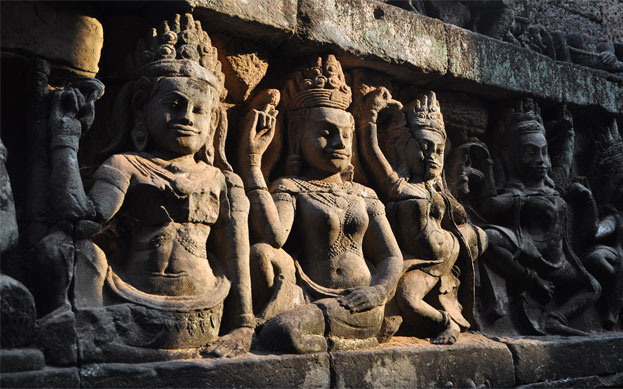
Thai massage is an ancient technique that originated in India more than 2,500 years ago, before becoming one of the cornerstones of traditional Thai medicine. Dr. Shivaga Komarpaj, personal physician and disciple of Siddhartha—better known as the Buddha—left India to spread Buddhist philosophy and wisdom alongside his master.
He developed his own massage technique inspired by yoga for healing purposes, based on the principles of the very powerful traditional Indian Ayurvedic medicine; he will then lavish it throughout his journey for the benefit of, among others, monks (Buddhist monks).
However, it is only once he arrives in Thailand that he turns this practice into a successful technique, the know-how of which he will teach to Thai traditional doctors. This teaching is then transcribed in writing and will then pass through the ages to become an integral part of Thai culture and its therapeutic practices.
It is within the Wat Pho temple "Temple of the Reclining Buddha" located in Bangkok that the first texts dealing with these techniques are preciously preserved. Since 1962, it has been home to the famous Thai massage school, thus becoming the guarantor of the preservation of this age-old knowledge. It is to bring this traditional art of living to Geneva that the museum was createdTerre des Sens.